

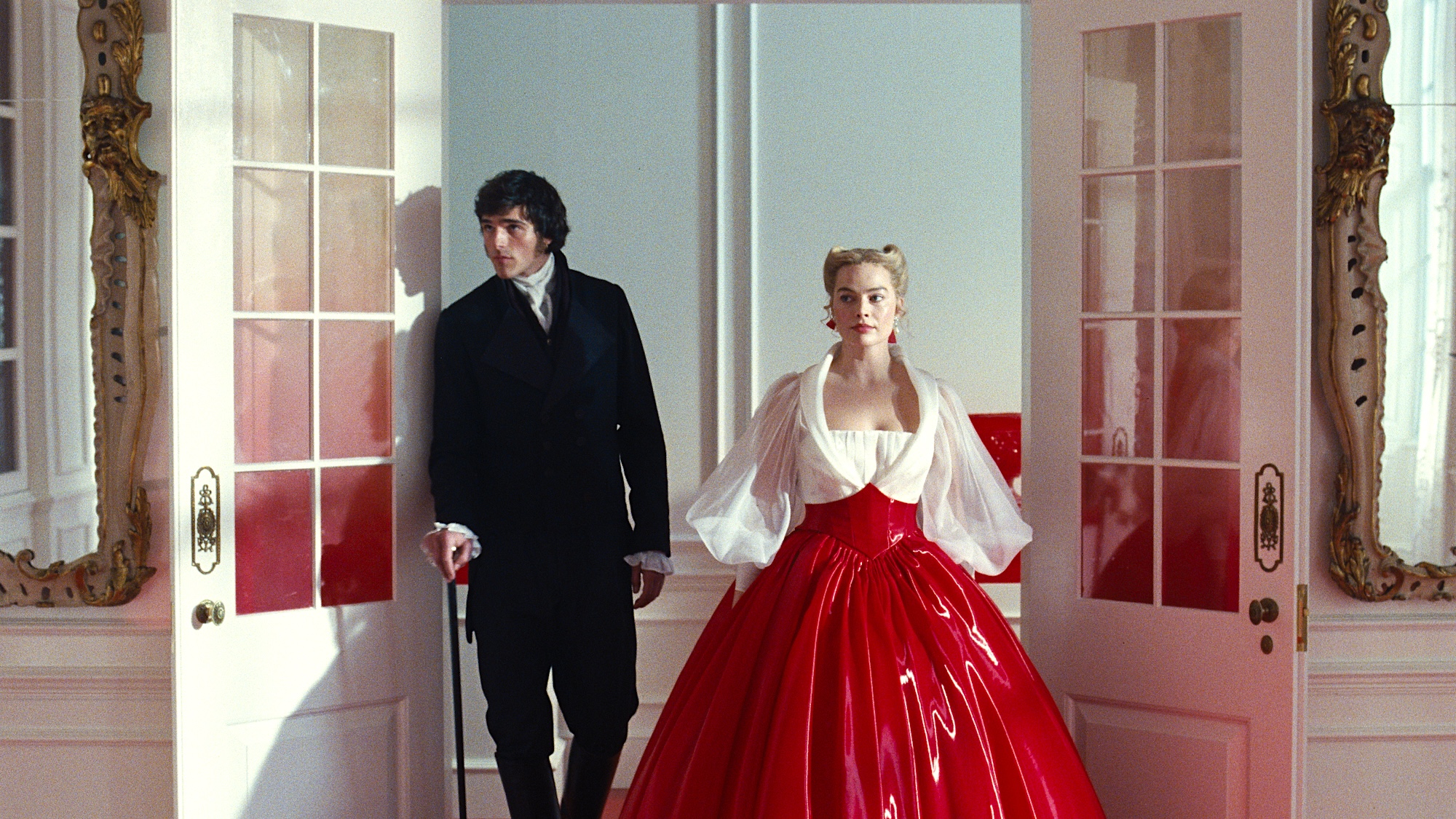
Wuthering Heights: The 10 Biggest Book Changes Emerald Fennell Made | Den of Geek Skip to main content area By Lacy Baugher | February 14, 2026 | Share on Facebook (opens in a new tab) Emily Brontë’s Wuthering Heights is not a novel for the faint of heart. Dark and transgressive, especially at the time of its publication in 1847, the story features intentionally cruel protagonists, a toxic central relationship, and an almost shocking amount of physical and psychological violence. It wrestles with themes of class, generational abuse, trauma, and revenge. And while Brontë’s prose drips with all-timers in terms of memorable quotes (“Whatever our souls are made of, his and mine are the same”), it’s not an especially easy read. Fittingly, perhaps, director Emerald Fennell’s 2026 feature film adaptation is also not a film for the weak of heart. Bursting with colorful anachronisms, gorgeous butterfly-bright gowns, and sensual audiovisuals, it’s often an adaptation in only the loosest sense of the term, a movie that’s more about vibes than stringent adherence to its source. (That it gets those vibes exactly right is the film’s primary saving grace.) But to bring her vision of putting “the greatest love story ever told” to the screen, Fennell had to make some fairly radical changes to Brontë’s story as we know it. Here are 10…
Published: February 14, 2026 5:45 pm
Source: Den of Geek — Read original