

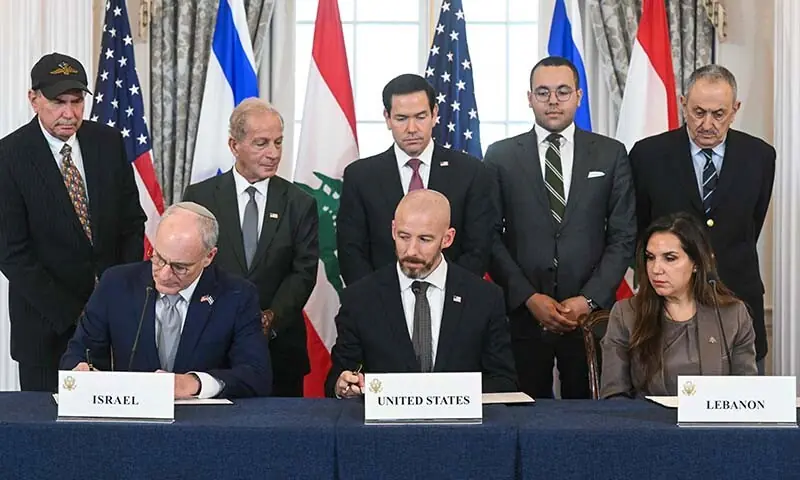
Lebanon and Israel, under the United States’ sponsorship, signed an agreement on Friday, hoping to end hostilities between them, but experts say it does not guarantee Israeli withdrawal from Lebanon, and its implementation depends on Hezbollah and Iran. Lebanon took the historic step of negotiating directly with Israel despite them having no diplomatic relations, as a reaction to Hezbollah drawing the country into the Middle East war on March 2. But with Israel saying it will not leave occupied Lebanese territory unless the militant group is disarmed, what traps and challenges lie ahead for the agreement? Although the framework agreement officially mentions Israeli “redeployment” from Lebanon, where its troops occupy swathes of the south, Israeli Prime Minister Benjamin Netanyahu immediately set the tone on Friday, saying his soldiers will remain in the self-declared “security zone” stretching 10 kilometres from the border, “as long as Hezbollah has not disarmed”. Imad Salamey, head of the Political and International Studies Department at the Lebanese American University, told AFP that one of the agreement’s shortcomings was that it made “no guarantee that Israel will fully withdraw from occupied areas or significantly restrict its military operations in southern Lebanon”.
Published: June 27, 2026 4:27 pm
Source: Dawn — Read original