

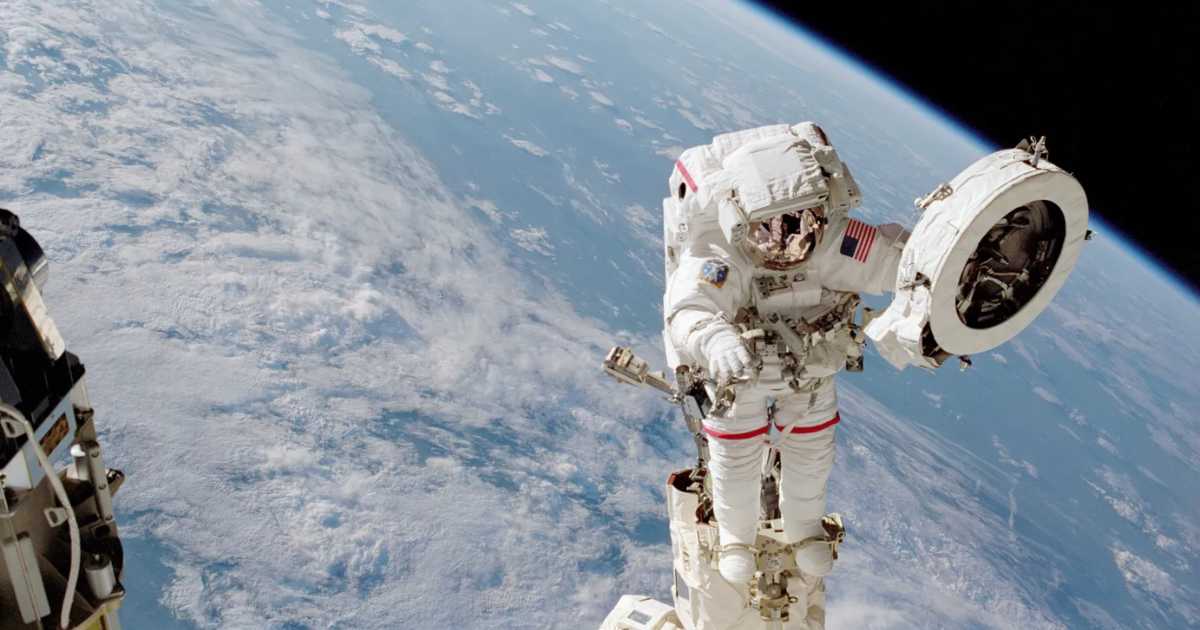
Astronauts aboard the International Space Station (ISS) appear to be floating completely free of gravity, but this is an illusion. In orbit, gravity does not disappear; rather, the ISS, and the astronauts in it, are in a state of continuous freefall. This removes the mechanical stress experienced by the human body on Earth, forcing the body to adapt in unusual ways. Given that trips to the ISS typically last months, scientists have made considerable strides in understanding what such prolonged exposure to microgravity does to human health, and findings show that nearly every organ system changes in space. Without the effects of gravity, bones lose their density, blood circulation patterns change, muscles weaken, and even the structural shape of our eyes can change. Although some of these changes are reversible, others might persist permanently. Here, we take a look at how space alters the human body. Bones are not a static, rigid framework, but rather living tissue that is constantly being renewed. Throughout life, specialised cells called osteoclasts remove old bone tissue while osteoblasts build new material. On Earth, due to gravity, walking, lifting, and general movement create mechanical stress, signaling the body to maintain strong bones. In microgravity, this is absent. Without the need to support weight, bone formation slows down while bone breakdown continues as usual. As a…
Published: July 25, 2026 5:08 pm
Source: starlust.org — Read original