

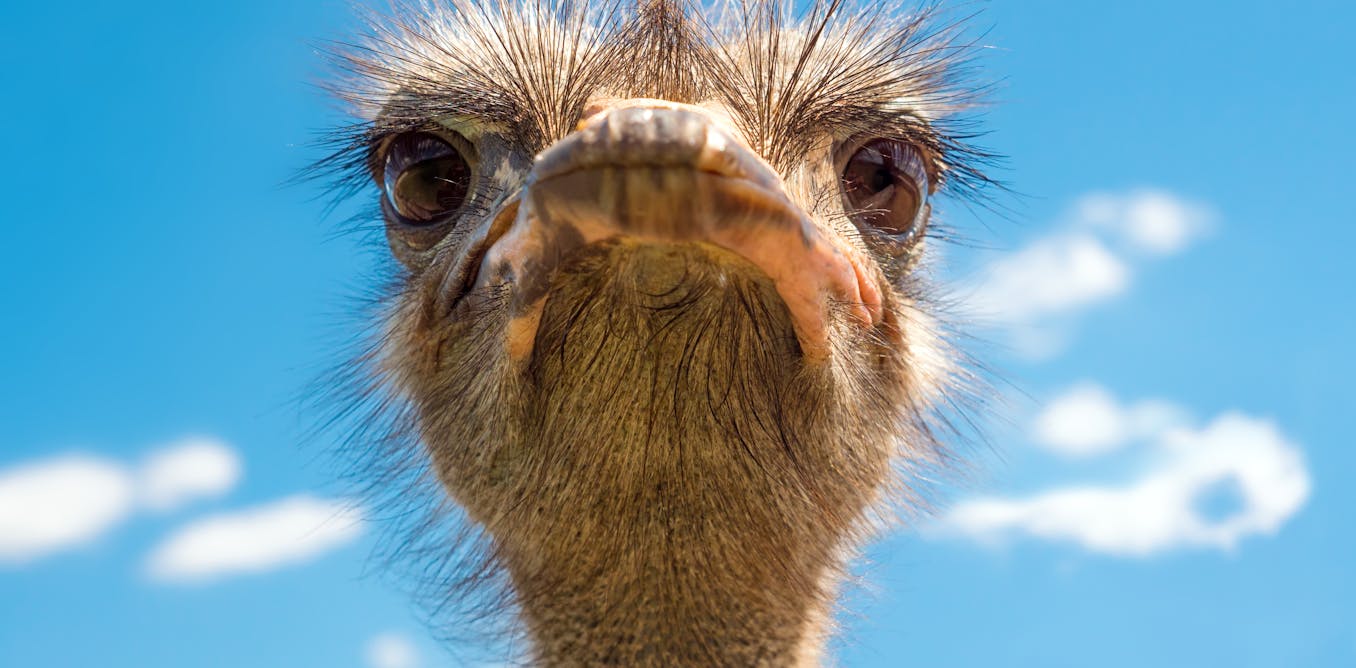
The ancestors of ostriches and emus were long-distance fliers – here’s how we worked this out
Home Klara Widrig
Postdoctoral research fellow, Smithsonian Institution Klara Widrig received funding from the Gates Cambridge Trust. Smithsonian Institution provides funding as a member of The Conversation US. Aside from being a delight to watch, flight in birds is regarded by many cultures as a symbol of freedom, and a source of inspiration for humans to build our own flying machines. This makes those birds that have given up flight for a land-based way of life seem all the more intriguing. In our new study of a 56 million-year-old fossil bird, my colleagues and I show that the distant ancestors of ostriches and other large flightless birds once flew great distances. Many flightless birds belong to Palaeognathae, a taxonomic group containing ostriches, rheas, emus, cassowaries and kiwi, as well as the tinamous of Central and South America.
Published: September 29, 2025 4:18 pm
Source: The Conversation — Read original