

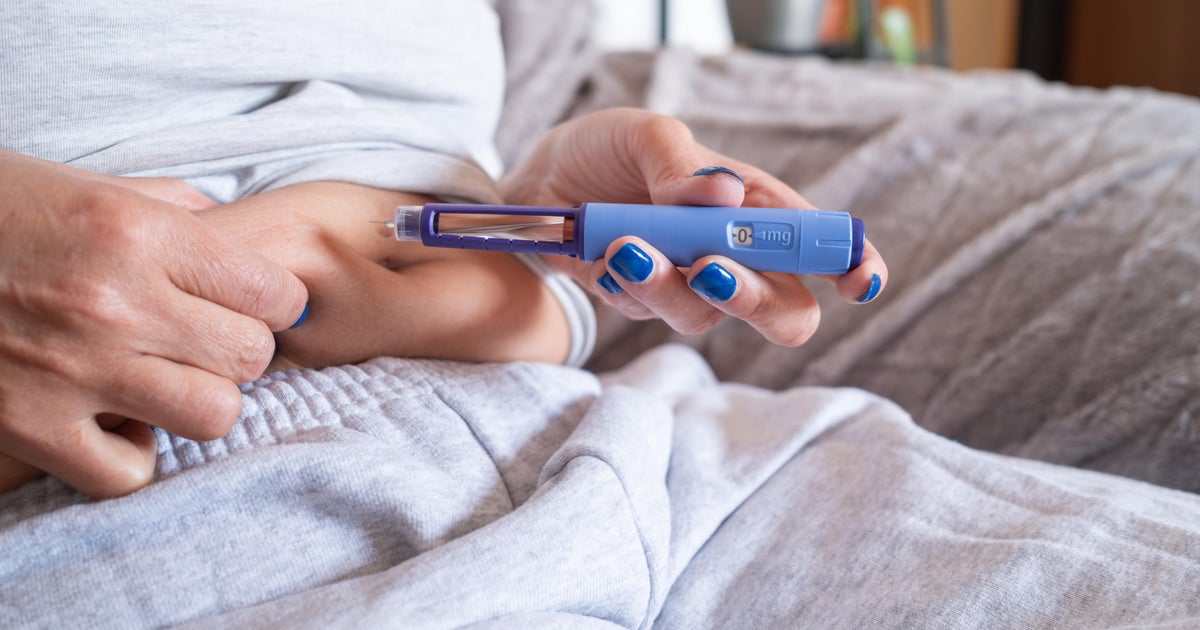
Watch CBS News GLP-1 drugs could lead to cost savings for workers and their employers by reducing employee sick leave, a new economic study finds. Researchers found that patients who used the drugs, sold under brand names including Ozempic and Wegovy, took 17% less long-term sick leave than people who didn't use the medications. The study defines long-term sick leave as illness-related absences lasting more than 30 days, according to the paper, published this month by the National Bureau of Economic Research.GLP-1 drugs, which are prescribed to people with diabetes or obesity, are known to improve patients' health, including by reducing the risk of major adverse cardiovascular events, including heart attacks and strokes, research shows."Those events, we'd imagine, would lead to long-term absences from work," Jonathan Zhang, one of the study's co-authors and a professor at Duke University, told CBS News. "So you can imagine the savings of not having those absences."The reduction in worker absences translates to savings of up to 1.5% of an individual's salary, or roughly $866 on average, according to the study, which analyzed worker and medication usage data from Denmark.To be sure, Denmark's sick leave policies differ greatly from those in the U.S. For example, in Denmark, employers must pay their workers their full salaries for illness-related absences of up to 30 days, while the government…
Published: July 21, 2026 5:54 pm
Source: CBS News — Read original